The Crossing Ledger
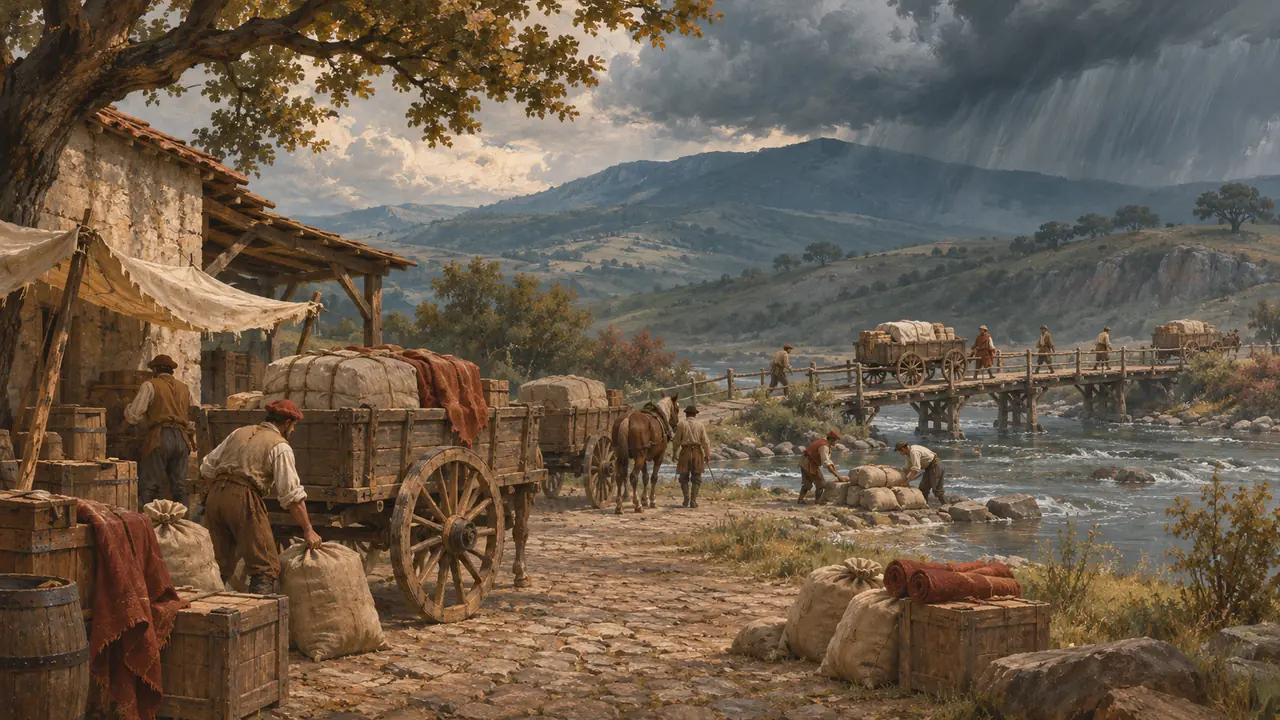
The Crossing Ledger is a historical supply game concept set along a fictional valley road. You play the officer responsible for getting stores across a river before the weather takes the crossing out of service. The road, wagons, and bridge keeper belong to a constructed setting. They are there to make the constraints of a difficult delivery legible through play.
The first manifest
| Load | Delivery problem |
|---|---|
| Dry meal | Keep sacks covered through the transfer. |
| Wheel fittings | Split the weight between light teams. |
| Lamp oil | Leave room in the yard for the empty wagon to turn. |
The bridge keeper’s morning slip says that only a light team may use the crossing. The afternoon slip has not arrived. The first team can depart on the strength of the last report, or you can wait while the quartermaster divides the weight. The first action on the ledger is to decide what must arrive by dusk. The lights at the receiving yard can wait one interval. Meal for the workers unloading the next consignment cannot.
What changes after a crossing
Assign a carrying team to a load and mark its expected arrival window. Decide which empty wagon can return on the next opening. Advance to the next report to see receipts, changes to the river and the condition of the waiting teams. At each stop, the player can move available stock between the yard and the crossing point. A dispatched load remains in transit until its receipt arrives. The game keeps a line for both deadline and report time so a late receipt does not look like a late departure.
Soaking rain can close the raised causeway on the far bank while the bridge itself remains usable. Consider leaving the second load at a small shed on the near bank. This protects the stores while giving up an early crossing interval. If the far bank reports room under cover, transfer can resume. The immediate consequence is shown on a timeline with the same columns as the earlier forecast. A player should be able to trace the decision from the last known state through the report that changed it.
Visual direction and prototype questions
The yard uses brown paper, small load sketches, and slate labels for conditions reported by other posts. Weather is visible in the landscape. In the ledger, a wet road has a different mark from a report that has not arrived. The first camera looks from the dry yard across the river to the ridge, where a squall is becoming visible. The manifest stays still while the landscape changes so readers who prefer reduced motion retain all of the information.
The project is at concept stage. The first test compares two versions of the transit line. One writes the next expected report directly beside the load. The other marks the delay in the receiving column. The design goal is for someone to explain what they know about a load even when it has not arrived. Compare this crossing with the two-route allocation in Winter Storehouse, or examine the related notes in Supply Reports.